
← Back to News
2026-03-23 18:59
MAKING AGGRESSIVE BREAST TUMOURS MORE RESPONSIVE
Now researchers want to reprogram the tumour cells to begin expressing such receptors, to enable current drugs to work again.
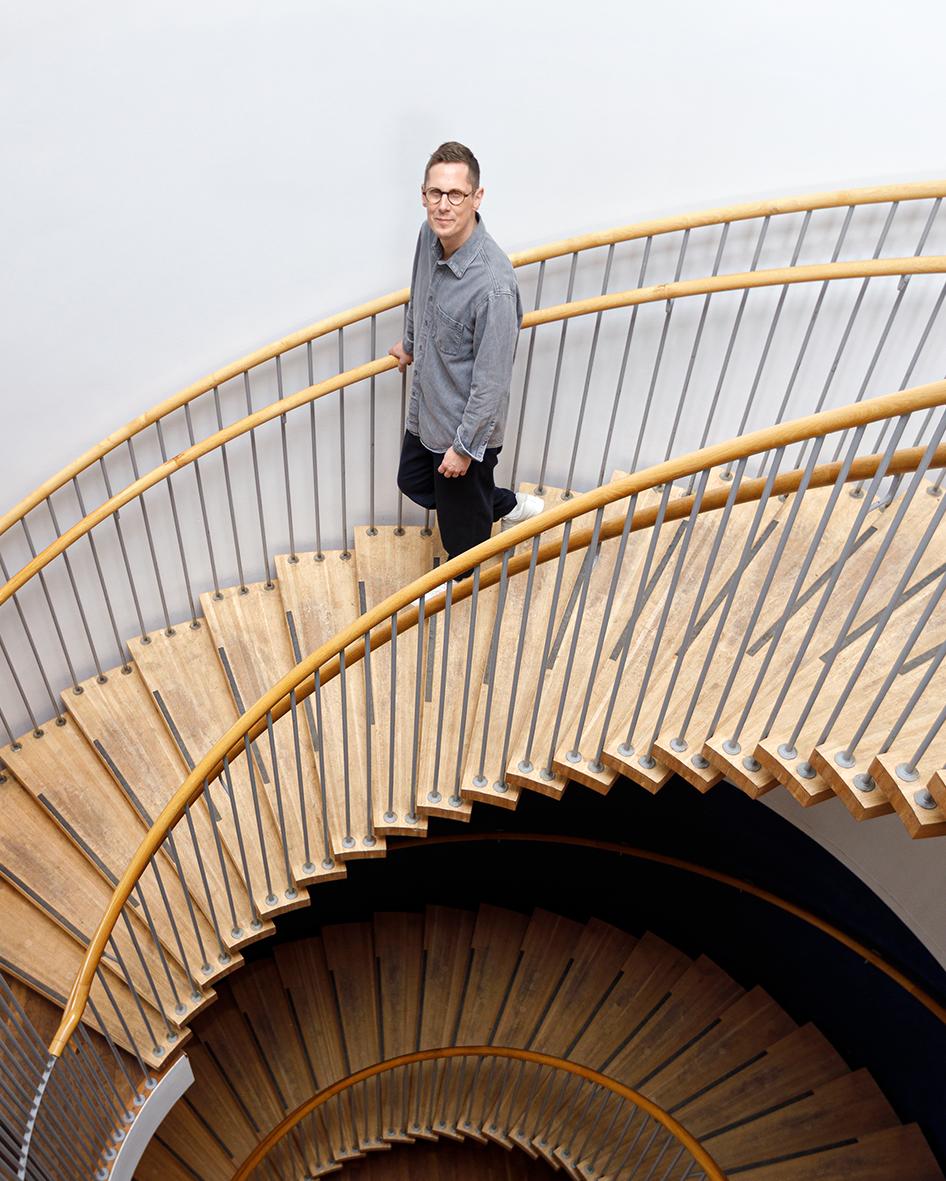
“In a modern imaging survey of a woman who lived in Egypt in around 2400BC, sections of disintegration were seen in the skeleton. This is characteristic of what it looks like when breast cancer has spread,” says Kristian Pietras, Professor of Molecular Medicine at Lund University.
Every year more than 10,000 women in Sweden are diagnosed with breast cancer, just over a tenth of whom have what is known as triple-negative breast cancer. This is characterised by the fact that the tumour cells lack receptors for hormones on the surface, which in turn makes the disease difficult to treat. Kristian Pietras describes how the research community has therefore tried to find other points of attack in order to create targeted drugs.
“But we approached it from the other direction: we already have good drugs for cancers that are hormone-sensitive, so why not try to get the triple-negative form to also start expressing such receptors?”
This is precisely the goal of the project Targeting cancer-associated fibroblasts in triple negative breast cancer: from patients to biology and back again.
Kristian Pietras has looked into not only the tumour cells themselves, but everything surrounding them – the tumour’s entire microenvironment. This includes such things as how the tumour receives its blood supply and nutrients, but also the role played by the body’s connective tissue cells.
“Connective tissue cells have been considered a bit boring because it was thought that they mostly provide stability, but they have been shown to have a variety of functions,” he says.
Five years ago his research group described a new signalling pathway in triple-negative breast cancer, a kind of conversation between the tumour cells and certain types of connective tissue cells. The connective tissue cells turned out to be behind the fact that triple-negative tumour cells maintained their characteristic of lacking receptors for hormones. But once the researchers could block the signalling pathway – or the conversation, if you will – then the tumour cells began to express receptors for oestrogen on the surface. This made them sensitive to hormone therapy with established drugs such as tamoxifen and letrozole; something that worked in both model mice and in mice that had patients’ triple-negative tumours placed in them. The results were published in 2018 in Nature Medicine. They were later able to show that the whole thing worked the other way too: tumour cells that initially had oestrogen receptors on them stopped expressing these if they were exposed to the connective tissue cells’ signals, as published in Oncogene in 2024.
“Why not try to get the triple-negative form to also start expressing such receptors?”
In the current project the researchers are to investigate whether it is possible to ‘reprogram’ patients’ tumours before surgery. They have initiated a window-of-opportunity study called I-CONIC. In healthcare today there is a waiting period between patients being diagnosed with triple-negative breast cancer and having surgery. Within this time window the researchers want to insert a drug called imatinib. In short, this blocks the signalling pathway between the connective tissue cells and the tumour cells. The drug is approved for the treatment of chronic myeloid leukaemia, but in this case the women are given it for 10 days before surgery.
“So we have small tissue samples from the tumour at diagnosis and samples are then taken again during the operation. This gives us data for before and after treatment with imatinib, telling us whether the tumour cells have started to form oestrogen receptors,” he says.
With each person therefore being their own control, 20 women are enough in the first part of the study.
As the tissue samples taken before surgery are small, the technology for analysing these needs to be refined. To get a picture of the tumours before and after the treatment, a routine test called PAM-50 is used which analyses the expression of 50 genes in the tumour cells. The researchers also use RNA sequencing to see different gene expression patterns in the tumours.
Another part of the project uses material from an ongoing study at Lund University called SCAN-B, which covers a large proportion of Swedish breast cancer patients who are based south of the Mälardalen region. This currently includes data from 20,000 women. In addition to biopsy material stored in a biobank, the researchers also gather information about each tumour’s genetic expression as well as data about the woman and her progress.
This large body of material identifies patients with triple-negative breast cancer in order to investigate the interaction between connective tissue cells and other cells in the stored tumour samples.
“But of course nothing is that simple, so to complicate the picture there are at least four main groups of connective tissue cells and we want to map what the different types do,” says Kristian Pietras.
The researchers therefore want to investigate the tumour samples in three dimensions in order to understand the interaction between tumour cells and other cells, such as connective tissue cells. Previously the tumour was crushed and was found to contain different types of cells.
“To complicate the picture there are at least four main groups of connective tissue cells, and we want to map what the different types do.”
“But because that made it all into a kind of smoothie, you could only see that banana and strawberry were present – not where and in what proportions. Today there are techniques for creating three-dimensional maps of tissues and then we see a fruit salad instead, where perhaps banana and strawberry always appear together,” he explains as an example.
Being able to produce so much information about the make-up of triple-negative tumours and which cells in them interact, and being able to correlate tumours’ different properties with different outcomes is a unique combination, says Kristian Pietras. His hope is that the project will end up making it possible to reprogram triple-negative tumours so that they become hormone-sensitive.
“To do this we would need to confirm the findings in a larger clinical study, where for example we can carry out the treatment to reprogram the tumours for a longer period than the 10 days we are currently doing,” says Kristian Pietras, continuing:
“We’re doing basic research, but our goal is to be able to make a difference for patients with breast cancer.”
The support that the project is now receiving from the Erling-Persson Foundation is very much welcomed.
“It means a great deal to us. It means we can maintain the high level of expertise we have built up in the research group, which is important as clinical studies in particular require a long-term perspective. Now we know that we have support for three years,” says Kristian Pietras.